GoHighLevel Funnel Builder:
The Complete Guide to High-Converting Funnels
Most GoHighLevel funnels don’t fail because of bad design software – they fail because of bad structure. This guide breaks down exactly how a high-converting GHL funnel is built, based on patterns from dozens of live agency builds.
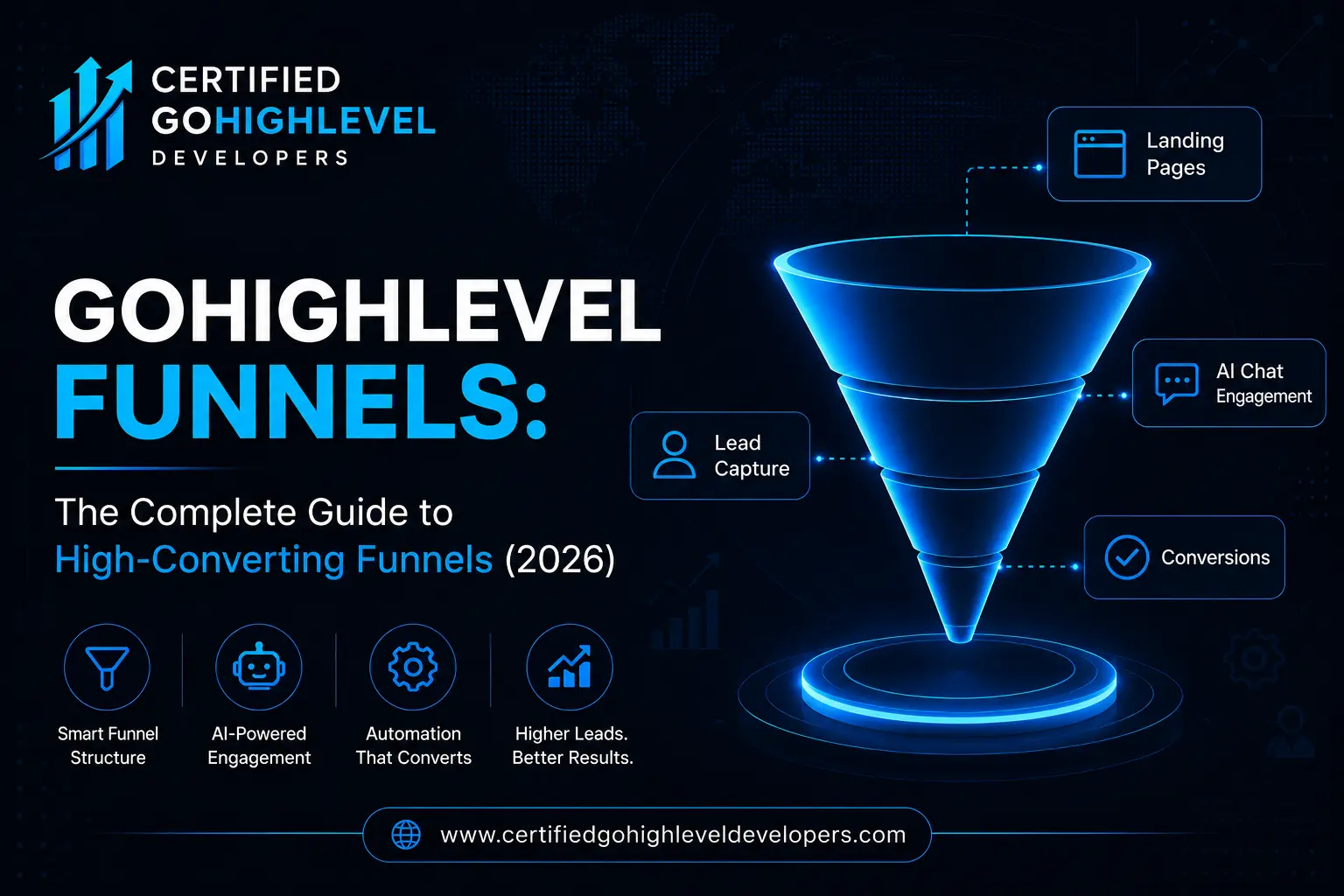
The platform gives you every tool you need: drag-and-drop pages, AI chat widgets, automation triggers, CRM pipelines. What it doesn’t give you is the strategy for how those pieces fit together. That’s the gap between a funnel that sits there and a funnel that sells.
What a GoHighLevel Funnel Actually Is (vs. a Landing Page)
A landing page is one page. A GoHighLevel funnel is a connected sequence of pages – each with a single job – that moves a visitor from “curious” to “converted” in deliberate steps.
Inside GoHighLevel, funnels and standalone landing pages are built in the same visual editor – which is exactly why so many people build a page and call it a funnel. The difference isn’t the tool; it’s whether each page has one clearly defined next action, and whether those actions are wired to CRM pipelines and automation on the backend.
Why Funnel Structure Beats Funnel Design
Agencies often over-invest in visual polish and under-invest in structure. Moving a client from a single generic landing page to a properly sequenced funnel – same offer, same traffic – routinely lifts conversion rate from the 3–5% range into the 15–25% range, simply because each page is doing less and doing it better.
- One offer per page. A page trying to sell three things sells nothing well.
- One CTA per section. Competing buttons split attention and reduce clicks on both.
- A logical next step, not a menu. Funnels remove navigation on purpose – every exit should be the intended exit.
The Anatomy of a High-Converting GHL Landing Page
Every funnel page that actually converts shares the same skeleton, regardless of industry:
Above-the-fold clarity
What it is, who it’s for, and the one action to take – visible without scrolling.
Proof stack
Logos, testimonials, numbers, or credentials placed before the ask, not after.
Objection handling
The two or three doubts a prospect has, answered in their own words.
Urgency or scarcity
Limited slots, response-time promises, seasonal relevance – used honestly.
Single, repeated CTA
Same wording, same button style, appearing 3–4 times down the page.
Mobile-first layout
Majority of GHL funnel traffic from paid social arrives on mobile – design there first.
Engagement layer
A chat widget or AI bot that catches visitors who scroll past the CTA without clicking.
Conversion tracking
GA4 + Meta Pixel on every key action so you know where visitors drop off.
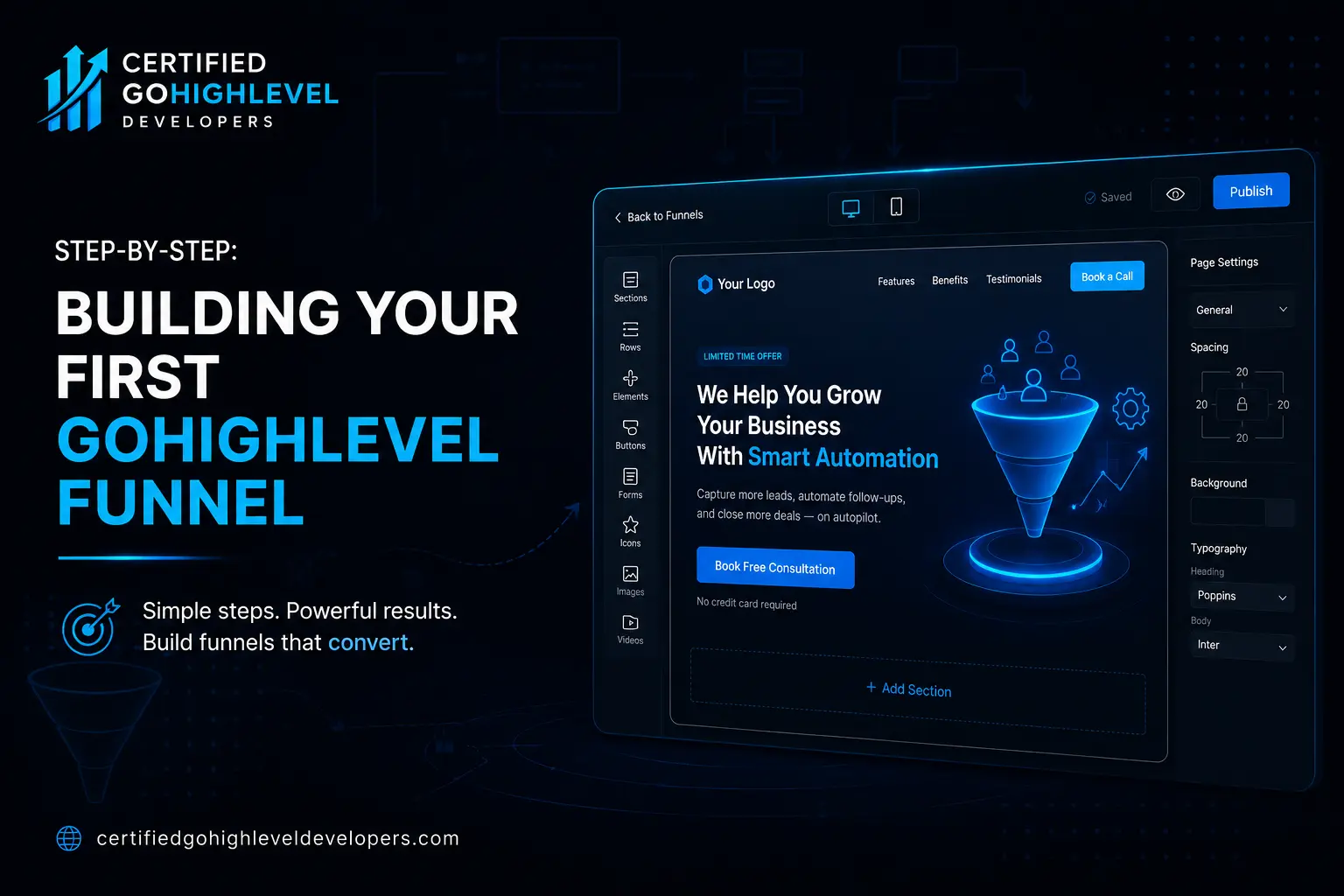
Step-by-Step: Building Your First GoHighLevel Funnel
Map the funnel before opening the editor
Sketch every page in the sequence and the single goal of each one. Building inside GHL before the structure exists is the single biggest cause of funnels that meander.
Build the opt-in page around one promise
Headline, sub-headline, one proof element, one form. Resist adding extra sections “just in case” – every extra section is an extra exit point.
Configure the form to feed your pipeline directly
Set the form to create or update a contact, apply a source tag, and drop the lead into the correct CRM pipeline stage on submit – not after a manual review.
Build the thank-you / booking page
This page has exactly one job: get the calendar booked or the next action taken. No re-selling the offer here – the visitor already said yes.
Wire in automation triggers
Every form submission and booking event should fire an immediate confirmation and notify your team – this is where the funnel stops being a static page and starts being a system.
Add tracking before you launch
GA4 and Meta Pixel events on every key action (page view, form submit, booking) – not just the final conversion – so you can see exactly where visitors drop off.
Test on mobile, then test the whole path end-to-end
Submit a real test lead through every page and confirm the automation actually fires. Funnels break silently far more often than they break visibly.
Skip the Trial and Error
Our GoHighLevel funnel development service starts at $299 – structure, automation, AI chat, and tracking configured from day one. No guesswork.
Speeding Up Builds With Templates & Snapshots
You don’t need to build every funnel from a blank canvas. GoHighLevel snapshots let you deploy a pre-built funnel – pages, pipeline, and automation together – into a new sub-account in minutes instead of days.
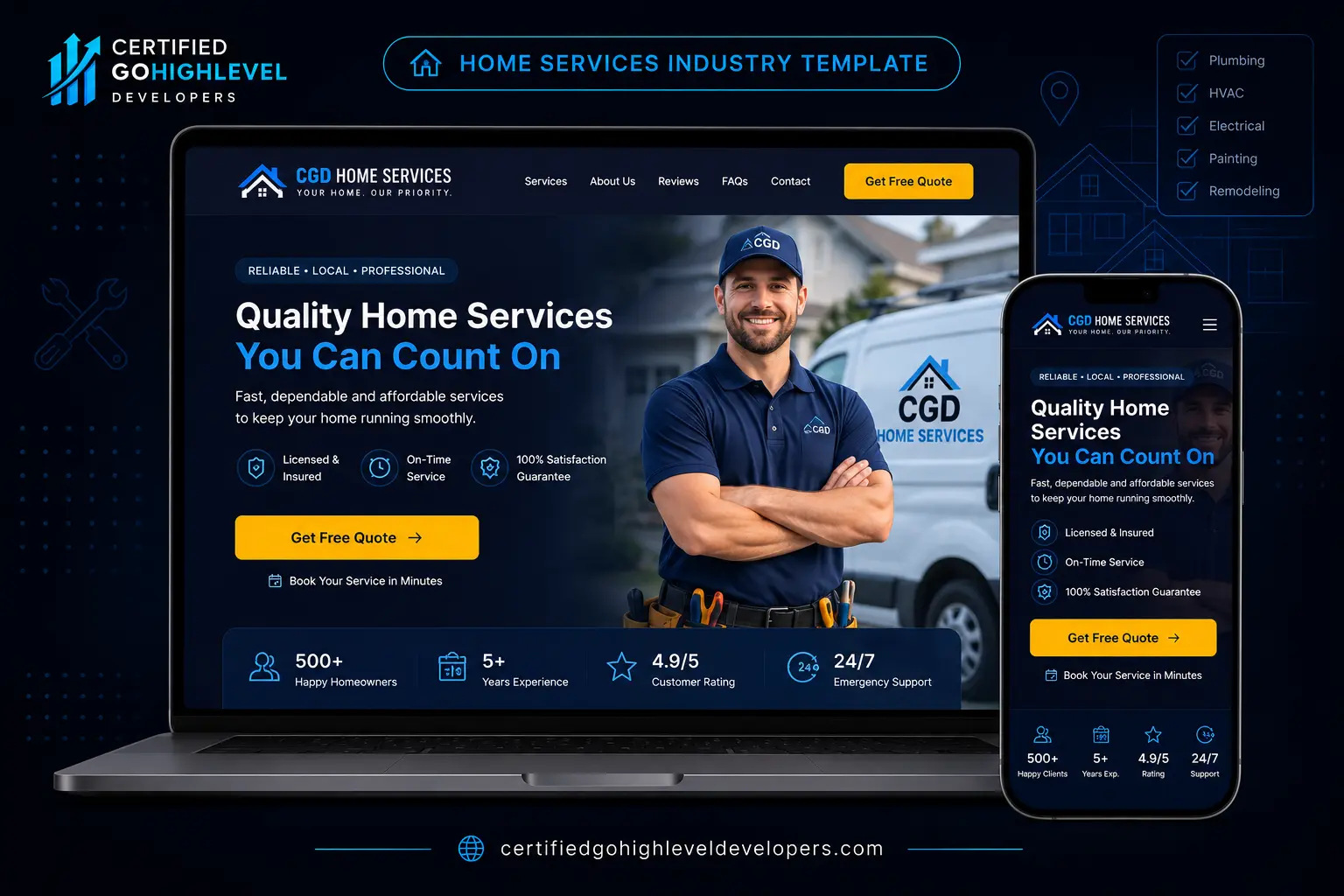
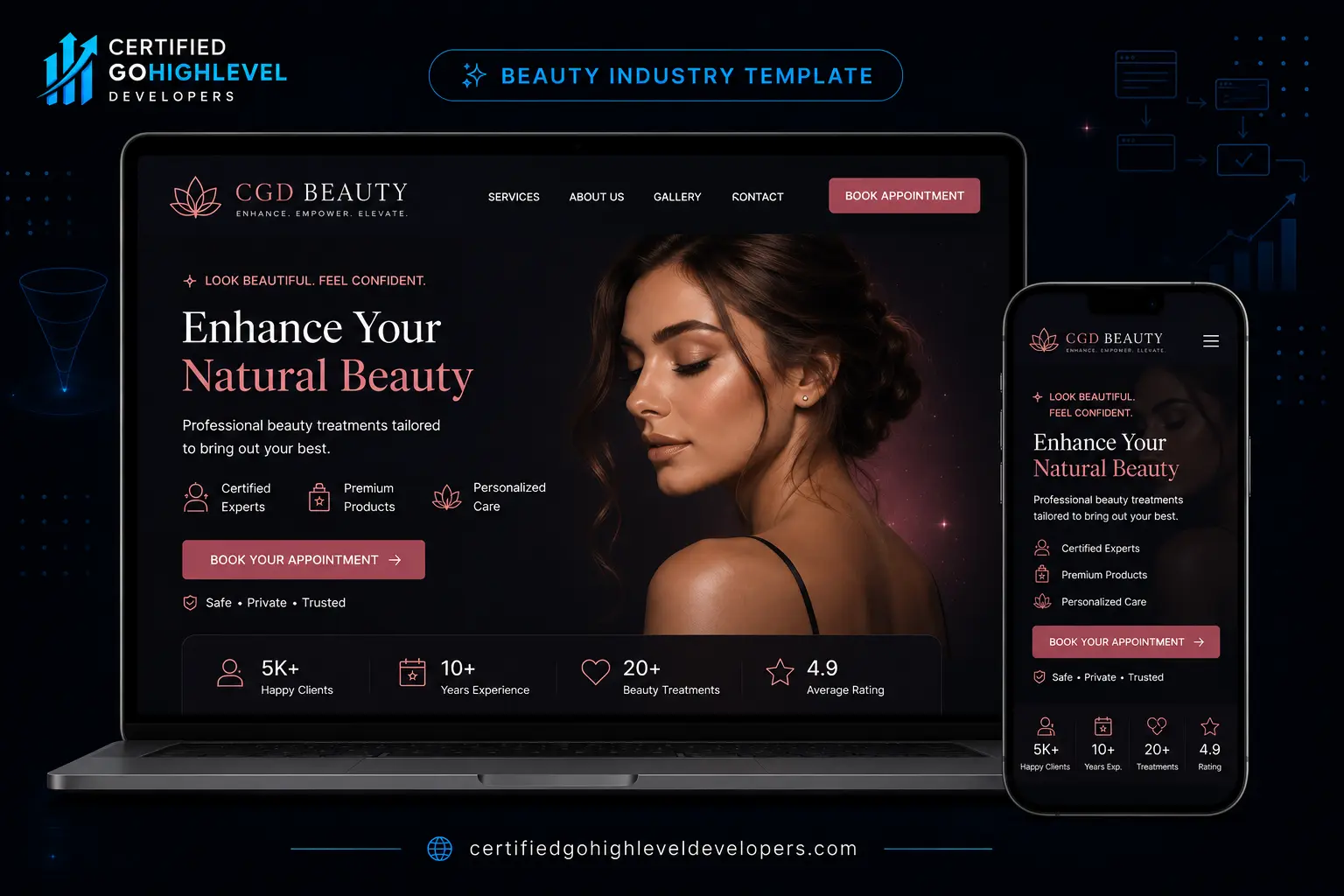
This is especially useful for agencies rolling out the same offer structure across multiple clients or locations. If you’re building repeatable funnel systems, a properly built GoHighLevel snapshot pays for itself after the second deployment.
Agencies managing 10+ client accounts report saving 6–12 hours per new client onboarding when deploying from a well-built snapshot versus starting from scratch. At a $75/hr equivalent cost, a $1,200 snapshot build pays back on the third deployment.
Adding AI: Conversational Bots & Voice AI Widgets
The newest layer in GHL funnel building is AI engagement. A conversational AI bot can qualify a visitor, answer common objections, and book an appointment without human involvement – catching the traffic that would otherwise scroll past your CTA and leave.
Conversational AI Bot
Qualifies visitors, handles objections, and books appointments – 24/7 with no human involvement needed.
Voice AI Widget
Lets visitors speak their question on mobile – noticeably increases engagement vs. typing on small screens.
Lead Qualification
AI asks your qualification questions before handing to a human – only warm, qualified leads reach your calendar.
Wired to Your Pipeline
Bot conversations produce the same tagged, routed lead as a form submission – directly into your CRM.
Funnels with a properly configured AI engagement bot consistently show 20–35% higher lead capture rates on the same traffic, primarily by recovering visitors who scroll past the opt-in form without submitting – the single largest source of funnel drop-off.
Connecting Your Funnel to CRM & Automation
A funnel with no automation behind it is just a form that emails you. The value shows up when a submission automatically triggers a confirmation, moves the contact through your pipeline, and starts a nurture sequence for anyone who didn’t book.
We’ve written a full breakdown of how to structure this layer in our GoHighLevel automation setup guide – worth reading alongside this one if you’re building both at once.
- Immediate confirmation – SMS + email within 60 seconds of form submit
- Pipeline stage movement – contact drops into the right stage automatically
- Team notification – your assigned rep is alerted before the lead goes cold
- Nurture sequence – 14-day follow-up for leads who didn’t book immediately
- Goal event exit – once a lead books, they exit the nurture automatically
For agencies that want the funnel, the automation, and the pipeline architecture handled as one connected system, our GHL automation services team builds all three together.
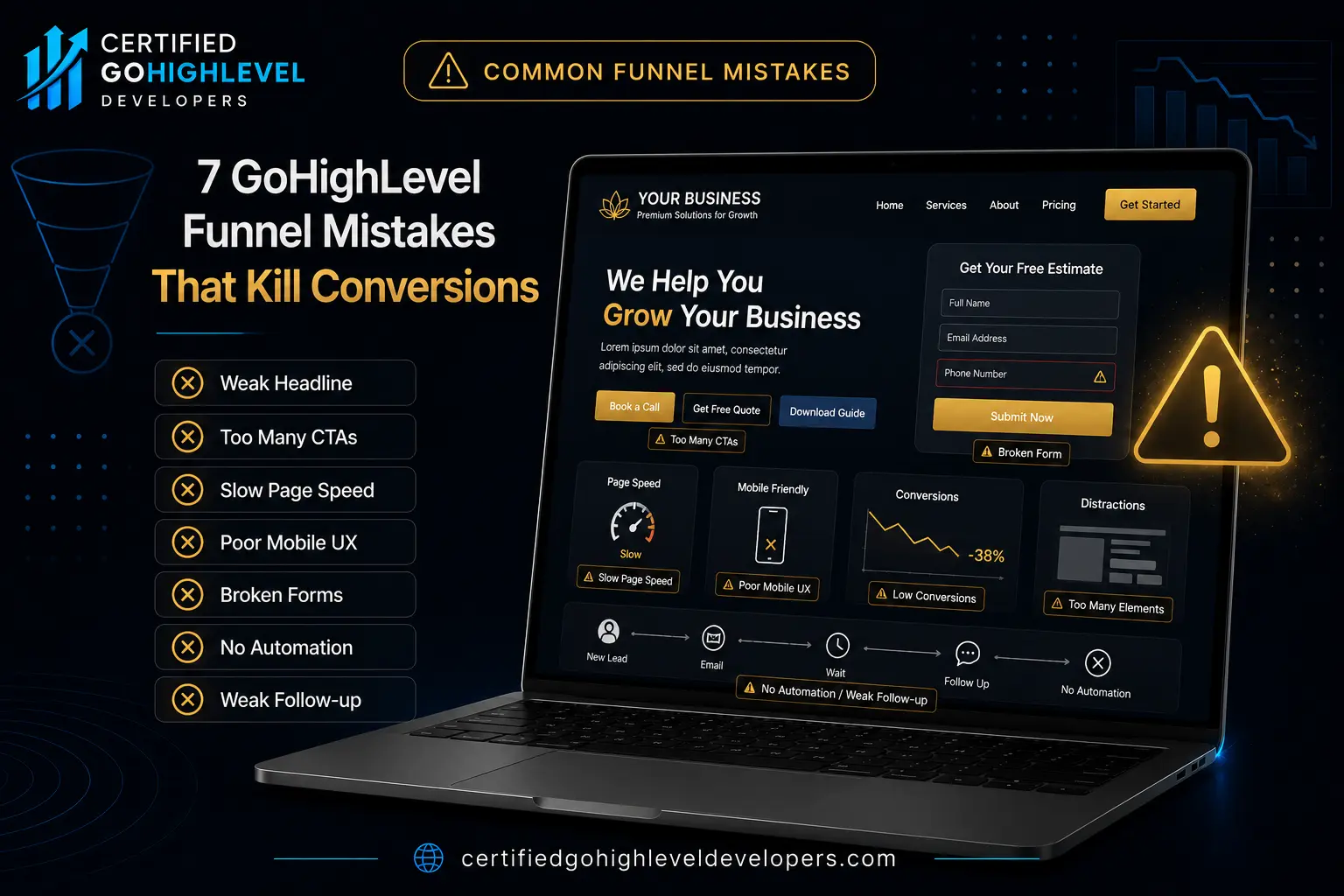
7 GoHighLevel Funnel Mistakes That Kill Conversions
Keeping the main site navigation on the funnel page
Every nav link is an exit ramp. Funnel pages should have none.
Burying the CTA below three scrolls of content
If someone has to hunt for how to take action, most won’t.
Generic stock imagery instead of real proof
A real testimonial with a name beats a polished stock photo every time.
No mobile-specific design pass
Desktop-first layouts that get “squeezed” onto mobile routinely lose half their conversion rate.
Treating the thank-you page as an afterthought
It’s often the highest-intent moment in the whole funnel – and the most under-optimised page on most sites.
No tracking on micro-conversions
Without page-view and form-start events, you can’t tell whether a low conversion rate is a traffic problem or a page problem.
Launching without testing the automation end-to-end
A form that submits successfully but never triggers the confirmation sequence looks fine – until a lead calls asking why nobody followed up.
“We’d rebuilt our opt-in page four times ourselves and couldn’t get past a 4% conversion rate. The team restructured it as an actual funnel – separate booking page, AI bot, proper automation – and we were at 19% within the first two weeks, same ad spend.” – Marketing Agency Owner, Ontario, Canada
DIY vs. Hiring a GoHighLevel Funnel Expert
| Aspect | DIY Build | Professional Build |
|---|---|---|
| Structure | Template-based, single page | Conversion-engineered, multi-step |
| AI Integration | Rarely configured | Conversational AI + Voice AI wired in |
| Automation | Manual or missing | Fully automated confirmations & nurture |
| Typical Conversion Rate | 3–5% | 15–25% |
| Time to Launch | Days to weeks (trial & error) | Days (proven process) |
Build it yourself if:
- It’s a single simple page with no automation dependency
- You’re testing an unproven offer and want to iterate fast and cheap
- You already have in-house GHL funnel experience
Bring in a specialist if:
- The funnel is client-facing or tied directly to ad spend
- You need AI bots, Voice AI, or multi-step automation wired in correctly the first time
- You’ve tried DIY and conversion rate isn’t moving despite good traffic
If that’s where you are, our GoHighLevel funnel development service handles the full build – structure, AI, automation, and tracking – starting at $299. Or you can hire a dedicated GHL developer for ongoing funnel work across multiple offers.
Frequently Asked Questions
Ready to Turn Your Funnel Into a Lead Machine?
Get a free strategy call and a custom funnel roadmap – structure, AI, and automation mapped to your offer.